
Flexible Grid Connection
COST CONTROLCOST DISTRIBUTIONCUSTOMER AGENCY
Last Updated October 6, 2026
AT-A-GLANCE
IMPACT TIME HORIZON
Medium-term (2–5 Years)
POTENTIAL COST SAVINGS
Low
CONTEXT AND BACKGROUND
New electricity loads and distributed energy resources (DERs) — such as electric vehicle fleet depots, large distribution battery storage systems, or industrial facilities (typically on the order of 1–20 megawatts) — need to connect to the electric distribution grid. Before they can connect, the utility assesses whether the existing grid has enough capacity to accommodate them. If not, the customer may need to wait for new or upgraded equipment, such as transformers, substations, or power lines, before connecting.
Historically, utilities have assessed the system impacts and grid upgrade needs of these requests assuming that all new resources must be able to operate at the maximum capacity at any time, with no constraints on the resource's operations. This traditional method results in the grid being built for the most unlikely of extreme scenarios — that all loads and resources will at some point be used at maximum capacity, simultaneously. This approach can create unnecessary delays for new resources hoping to connect to the grid and can result in costly upgrades that could be avoided by modifying how we operate interconnecting loads and resources.
Flexible grid connection provides an alternative. Instead of requiring enough grid capacity for unrestricted operation, a flexible grid connection policy can define specific methods, processes, and infrastructure that allow a customer to operate a resource flexibly and reduce strain on the grid. For example, an EV charging facility might reduce charging during a few high-demand hours while operating normally the rest of the time. Similarly, a battery project could limit the amount of electricity it exports to the grid when necessary. This allows more sources of electricity supply and demand to connect to the grid and gives customers more options to connect new loads and resources quickly even in areas with grid capacity limitations. It also can defer or avoid some distribution system upgrades, where avoided grid investments would otherwise be recovered from ratepayers, helping contain electricity system costs and keep bills down.
State-level policies to support flexible grid connection can be particularly valuable when paired with other strategies that encourage utilities to pursue cost-effective alternatives to traditional infrastructure investments, such as capex-opex equalization, multi-year rate plans, and improved planning processes.
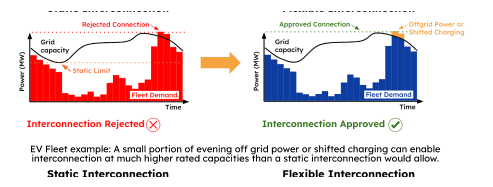
The image above shows how flexible grid connection can help a new electric vehicle fleet to operate without requiring grid upgrades. The graph on the left shows that the fleet's connection request was rejected because its demand would have exceeded grid capacity during a short period. The chart on the right shows how a flexible grid connection approach allowed the fleet's connection request to be approved after it agreed to procure off-grid power or shift charging during peak times to remain within grid capacity.

Impact Time Horizon
How long it typically takes for changes to materialize in utility behavior or customer bills
MEDIUM-TERM (2–5 YEARS)
Utilities may be able to implement flexible grid connection approaches relatively quickly, but broader impacts on system costs and customer bills are likely to emerge over several years.

Potential Cost Savings
The level of cost savings that can reasonably be expected to result from this policy
low
Flexible grid connection can lower costs by avoiding or deferring distribution system upgrades and allowing new generation, storage, or loads to connect using existing grid capacity. However, the savings that ultimately flow to ratepayers will depend on the type of project, utility cost-allocation rules, and whether the avoided upgrade would otherwise have been paid for by the connecting customer or recovered from customers more broadly.
Flexible grid connection is likely to have the greatest affordability impact when paired with broad connection, planning, and utility cost control reforms that maximize the number of resources connecting to the grid at the lowest possible cost.

Target Cost Drivers
The policy can help to ease customer cost pressures created by these drivers
Aging grid infrastructureFuel price volatilityExtreme weather/wildfiresLoad growthMisaligned utility incentives

Legislative Design & Implementation Considerations
Legislative approaches to flexible grid connection will differ state-to-state but can consider the following design choices:
LEVEL OF DIRECTION
Legislatures can choose whether to authorize, encourage, or require action on flexible grid connection. For example, legislation could authorize regulators to explore the approach, direct them to develop rules, or require utilities to offer flexible connection to eligible customers.
RESPONSIBLE ACTOR
States can determine which entities are responsible for advancing flexible grid connection. Depending on existing state authorities, legislation could direct regulators to establish requirements or approve tariffs, utilities to develop and offer flexible connection options, or both.
SCOPE AND PRESCRIPTIVENESS
Policymakers can determine whether to specifically advance flexible grid connection or establish broader requirements that allow it to compete with other solutions. For example, legislation could establish a framework specifically for flexible grid connection or include flexible grid connection among multiple options for reducing connection costs and timelines, such as traditional grid upgrades and other alternatives. Policymakers can also establish the scope of reforms, such as directing utilities or utility commissions to make changes to grid connection eligibility, customer protections, or operating requirements.
IMPLEMENTATION MECHANISM
States can determine where and how flexible grid connection should be incorporated into existing utility and regulatory processes. Options include establishing flexible grid connection tariffs or agreements, integrating flexible grid connection into distribution system planning, or considering it as part of broader reforms to interconnection and energization processes.
The table below provides examples of how authority and responsibility for flexible grid connection may be distributed across key entities.
| VENUE | POTENTIAL ROLES |
|---|---|
| Legislature |
|
| Regulator |
|
| Administration |
|
| RTO/ISO |
|
REAL-WORLD EXAMPLES
While still relatively nascent in the United States, states have begun to put flexible grid connection policy into practice.


Colorado
SB 24-218 requires utilities to propose an optional flexible interconnection or energization tariff or agreement to a customer as an alternative to when a system upgrade would otherwise be required to connect a customer. This helps connect new customers promptly, affordably, and reliably.
FURTHER READING
- "Flexible Grid Connections Implementation Guide" - CHARGED Initiative, 2026
- "Let's Get Flexible: Considerations for Unlocking Grid Capacity Using Flexible Interconnection" - EDF, 2025