
Plug-in Solar
COST CONTROLCOST DISTRIBUTIONCUSTOMER AGENCY
Last Updated July 31, 2026
AT-A-GLANCE
IMPACT TIME HORIZON
Short-term (0–2 Years)
POTENTIAL COST SAVINGS
Low
CONTEXT AND BACKGROUND
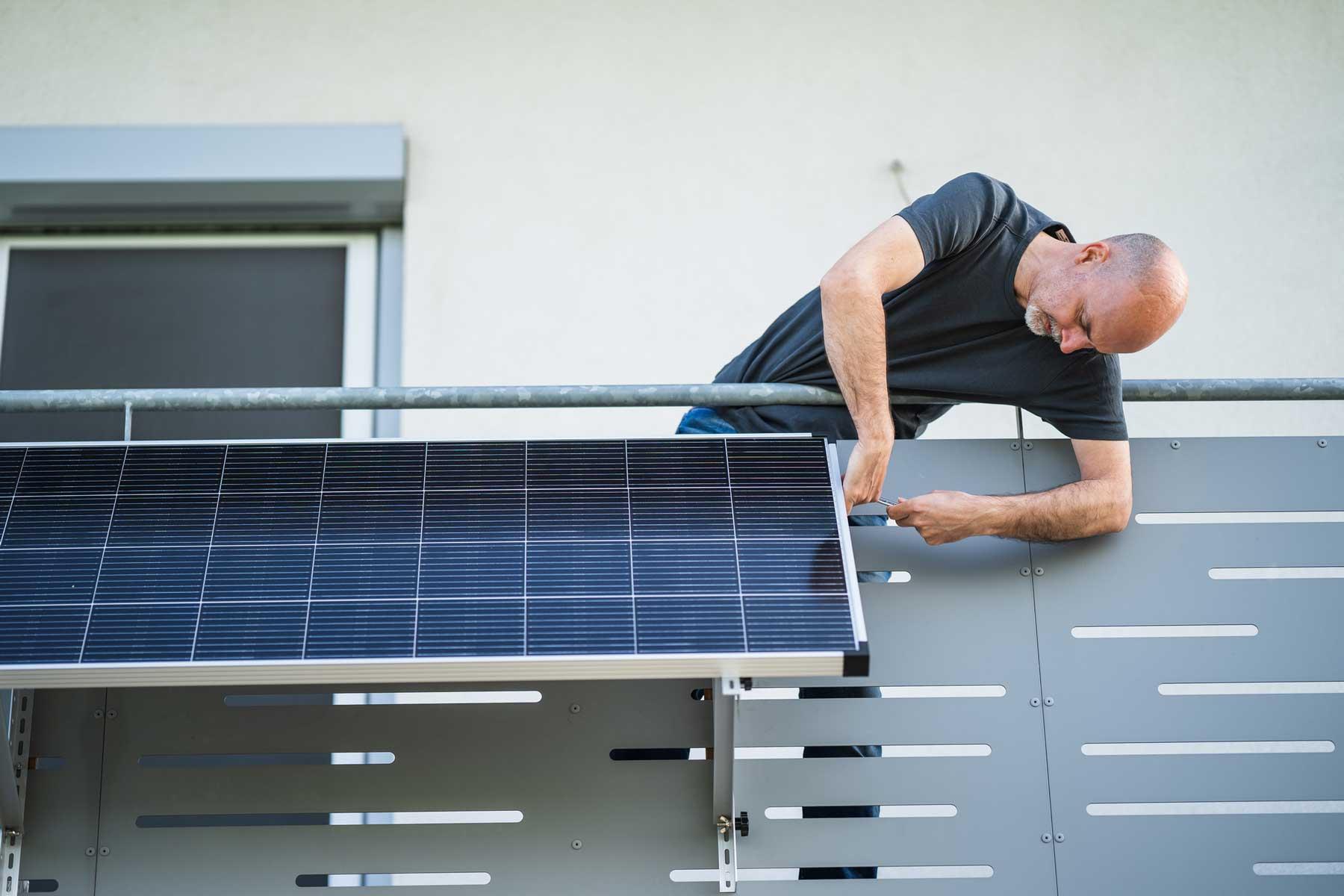
Plug-in solar systems (also called balcony solar) are small, portable solar photovoltaic systems (typically 200–1,200 watts) that can be placed on balconies, patios, or other outdoor spaces and plugged directly into a standard electrical socket. The only installation steps involve securing the panels and ensuring the outlet can handle the load. These systems can generate enough electricity to power a few small appliances, offsetting a portion of a household's electricity use.1 Their relatively low cost (~$1,500 for an 800-watt system), portability, and ease of installation make them more accessible to households that cannot afford traditional rooftop solar systems or do not have access to a suitable roof (as with apartments).
Early estimates suggest households can save approximately $15–$50/month on their electricity bills, depending on local electricity prices, available sunlight, system size, and consumption patterns, allowing systems to pay for themselves in as little as two to five years. Plug-in solar panels can also be paired with plug-in battery storage systems to power essentials during outages.
Millions of plug-in solar systems have been installed in Europe where they are available for sale in supermarkets and large retailers. However, adoption in the United States has been limited by two primary barriers. First, there is no comprehensive safety standard for these systems. UL Solutions, an independent product safety testing and standards organization, has recently launched a product testing and certification program for complete plug-in solar systems based on a safety outline (UL 3700). Prior to UL 3700, the only way for a plug-in solar system to receive a UL certification was for it to consist of individually certified components. Importantly, a UL outline does not follow the same development procedures as a UL standard, and UL Solutions is actively developing an official standard.2
Additionally, plug-in solar systems are subject to the same interconnection and net metering requirements as traditional rooftop solar systems. Interconnection is the process of getting a system approved to connect to the electric grid, and net metering is the billing arrangement that credits customers for electricity they produce and send back to the grid. Requiring plug-in solar systems to go through the same interconnection and net metering processes as rooftop solar is an unnecessary barrier to adoption as plug-in solar systems are unlikely to export electricity back to the grid due to their small size. Since states have limited authority over national safety standards, this document focuses on state policies that can address the barriers posed by interconnection and net metering requirements.
The interconnection and net metering approval process for traditional rooftop solar systems in the United States takes about 19 days on average (excluding installation time) and contributes to the high "soft costs" of rooftop solar systems. Utilities review rooftop solar systems to ensure safety and grid reliability and install a two-way meter to ensure proper compensation for households exporting energy to the grid. These processes are critical for traditional rooftop solar systems, but they pose an unnecessary barrier for households seeking to adopt plug-in solar.
States can support plug-in solar adoption by creating a separate class of plug-in solar systems that are exempt from these interconnection and net metering requirements. In most states, legislatures or utility regulators can implement these changes, but legislation may be needed to enable utility regulators to make these changes. As of July 2026, roughly half of states are considering enabling legislation, and eight states have already enacted legislation.

Impact Time Horizon
How long it typically takes for changes to materialize in utility behavior or customer bills
SHORT-TERM (0–2 YEARS)
Plug-in solar systems can be installed immediately after legislation becomes effective and start delivering savings to customers. Importantly, the market for plug-in solar is still nascent, so manufacturers will need to expand their footprint in the United States.

Potential Cost Savings
The level of cost savings that can reasonably be expected to result from this policy
low
While cost savings will vary based on system size, solar resources, and electricity rates, households with plug-in solar can reduce their electricity bills by $15–$50 per month. Systems typically cost between $500 and $1,500, so households might experience a payback period of two to five years.

Target Cost Drivers
The policy can help to ease customer cost pressures created by these drivers
Aging grid infrastructureFuel price volatilityExtreme weather/wildfiresLoad growthMisaligned utility incentives
This policy addresses overall affordability, easing customer cost pressures that may arise from any of the drivers listed above.

Legislative Design & Implementation Considerations
Legislation enabling plug-in solar could include the following components:
SYSTEM SIZE
Most systems currently on the market fall between 400 and 800 watts, and most enabling legislation in the United States has capped systems at 1,200 watts. In Germany, plug-in solar systems are capped at 800 watts. Systems up to 1,200 watts can generally plug in to 120V circuits (standard for US wall outlets) while larger systems may need 240V circuits.
UTILITY APPROVALS AND INFORMATION SHARING
Most states have passed legislation that exempts households with eligible plug-in solar systems from needing interconnection agreements, other utility approvals, or having to pay any fees to utilities prior to installation. States can also consider if and how households should share information regarding their plug-in solar system with their utility prior to installation. For example, a state can consider if manufacturers should share relevant data with utilities at the point of sale similar to how some distributed energy resource registries operate.
INTERACTION WITH NET METERING / NET BILLING PROGRAMS
Most states that have passed plug-in solar legislation in the United States have exempted systems from net metering or net billing programs, which require interconnection agreements. In California, households that already have net energy metering agreements can add up to a 1,000-watt plug-in solar system without utility approval. Plug-in solar systems typically do not produce enough power to exceed household demand and are equipped with "anti-islanding" capability to cut generation during power outages. Exempting plug-in solar systems from these programs could address one barrier to adoption while allowing for the uncommon circumstances in which systems backfeed energy to the grid (these exports are not compensated if systems are excluded from net metering/net billing programs).
SAFETY CERTIFICATIONS AND OTHER CONSIDERATIONS
States can require plug-in solar systems to meet various safety requirements and certifications including the National Electric Code, state building codes, and UL or other national testing laboratory certifications. In January 2026, UL Solutions published UL 3700, a safety outline for complete plug-in solar systems, and they launched a corresponding testing and certification program. However, UL has not developed an official standard yet as a safety outline does not follow the same development process as an official UL standard. An official standard will streamline product certification and support market growth for plug-in solar. States can consider the circumstances under which systems should be installed by a licensed electrician while keeping in mind that this could increase costs for households. For example, electricians are needed to install control hardware to prevent energy exports and to install new outlet receptacles. Additionally, states can support general consumer education on plug-in solar safety and actions to verify if homes are suitable for plug-in solar.
INCENTIVES AND REBATES
States can consider whether any incentives or rebates for plug-in solar systems are beneficial or necessary to support state goals. For example, incentives for renters or low-to-moderate income households could help make plug-in solar more accessible for a wider population. States can consider if/how plug-in solar should be integrated into existing state and utility programs (e.g., energy efficiency, energy technology rebates, etc.).
The table below provides examples of how authority and responsibility for plug-in solar may be distributed across key entities.
| VENUE | POTENTIAL ROLES |
|---|---|
| Legislature |
|
| Regulator |
|
| Administration |
|
| RTO/ISO |
|
REAL-WORLD EXAMPLES
As of July 2026, 8 states have enacted plug-in solar legislation, and an additional 25 states are actively considering or have considered legislation.

Connecticut
Connecticut enacted legislation (H.B. 5340) in 2026 to enable plug-in solar. The legislation requires systems to be less than 1,200 watts, meet state building codes, meet the National Electric Code, and be certified by UL or an equivalent testing laboratory. It exempts plug-in solar systems from utility approval or interconnection requirements provided that a customer does not have multiple systems. The legislation also directs state agencies to consider any updates to building and fire codes necessary to ensure safe installation of plug-in solar systems.

Maine
Maine enacted legislation (L.D. 1730) in 2026 to enable plug-in solar. The legislation defines plug-in solar and plug-in battery systems and restricts them to a total export capacity of 1,200 watts or fewer. It allows households to install systems with a combined inverter output of up to 420 watts without any oversight, but licensed electricians need to install systems between 420 and 1,200 watts. Systems must meet the National Electric Code and UL standards, and they are exempt from any utility approvals, interconnection requirements, and net billing programs.

Utah
Utah became the first state to enact plug-in solar legislation (H.B. 340) in 2025, paving the way for other states to consider legislation. The legislation amends a previous statute by defining plug-in solar systems. It limits these systems to less than 1,200 watts, requires them to meet the National Electric Code, and requires systems to be certified by UL or an equivalent testing laboratory. The legislation exempts plug-in solar systems from any utility approval, interconnection requirements, and net metering programs.
FURTHER READING
- "Balcony solar is taking state legislatures by storm" - Canary Media, 2026
- "Which States are Moving Plug-in Solar Legislation?" - Bright Saver, 2026
- "Balcony solar bills take hold across state legislatures" - Solar Builder, 2026
- "Plug-in & balcony solar panels: Are they worth it?" - EnergySage, 2026
- "The balcony solar boom is coming to the US" - MIT Technology Review, 2026
- "What States Need to Know about Plug-in Solar" - Clean Energy States Alliance, 2026